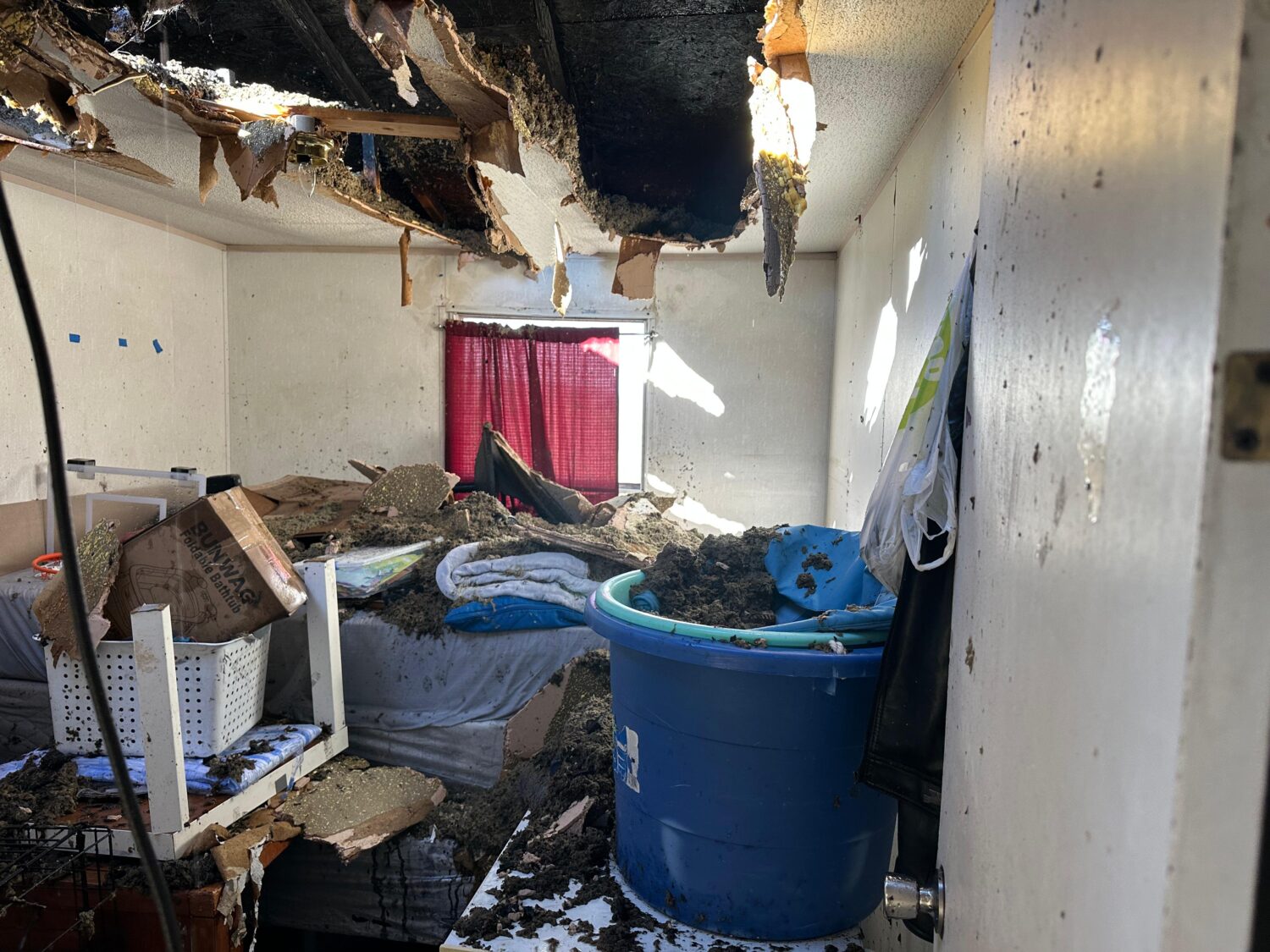
Across the highly impoverished communities of the Eastern Navajo Nation, a house fire can be the final blow. Fire victims like Arlene Augustine of Mariano Lake often face a long and uncertain journey in the aftermath.
In this deeply personal interview, Arlene Augustine shares her firsthand account of losing her home for the second time. A mother, grandmother, and caregiver, she speaks about survival, homelessness, faith, and what “home” truly means beyond walls and possessions.
Through her words, we are reminded why compassion, solidarity, and action remain at the heart of St. Bonaventure Indian Mission & School’s commitment to serving those most in need — with your valuable and continued support.
St. Bonaventure Indian Mission & School (SBIMS): Can you tell me how the fire started? Is there anything that you recall?
Arlene Augustine (AA): Well, on the morning of Saturday [November 22, 2025], I was working, and I took my daughter with me. I set the fire at 5:00 a.m., and I went back into the room; there was a heater. It was warm there, and about 20 minutes later, I came out thinking it should be warm now, so I’d better make some coffee. When I came out, it was smoking all over, and I couldn’t see, and I removed everything from the stove. I ran and told my daughter, “Get up, my house is on fire.” Then she put on her clothes, and I got a ladder and tried to [extinguish the fire]. She was giving me water. We tried to put it out ourselves, but it had already spread too much through the ceiling. Then I told her, “Call 911 and call your uncle.” I couldn’t think of anything. I left my purse and everything in there, and the firetruck came right away, like 25 minutes later, and my brother came over. I tried to help him, but it was just too late. They put out the front part, but it started again and went all the way around fast, and they called the electric company, and I guess they turned off the electricity. They did a lot of water damage. Later, the boys — my husband’s brothers — somehow mopped it up. I guess they thought I was going to be living there, but I said, “I don’t want to live in there. It’s smoking, and my daughter also has asthma. I don’t want her to live there.”
SBIMS: Among the things that you lost, what mattered most to you?
AA: My clothes and papers were smeared with water. Everything smelled. Even the clothes that didn’t burn smelled, so I had to wash them several times. Also, some jewelry, clothes, our bedroom set, all my daughter’s stuff — her clothes, toys, her electronic stuff — all were damaged somewhat. I didn’t want anything more from there because they smelled so bad. But I did save a few pots and pans, which we now use at the housing.
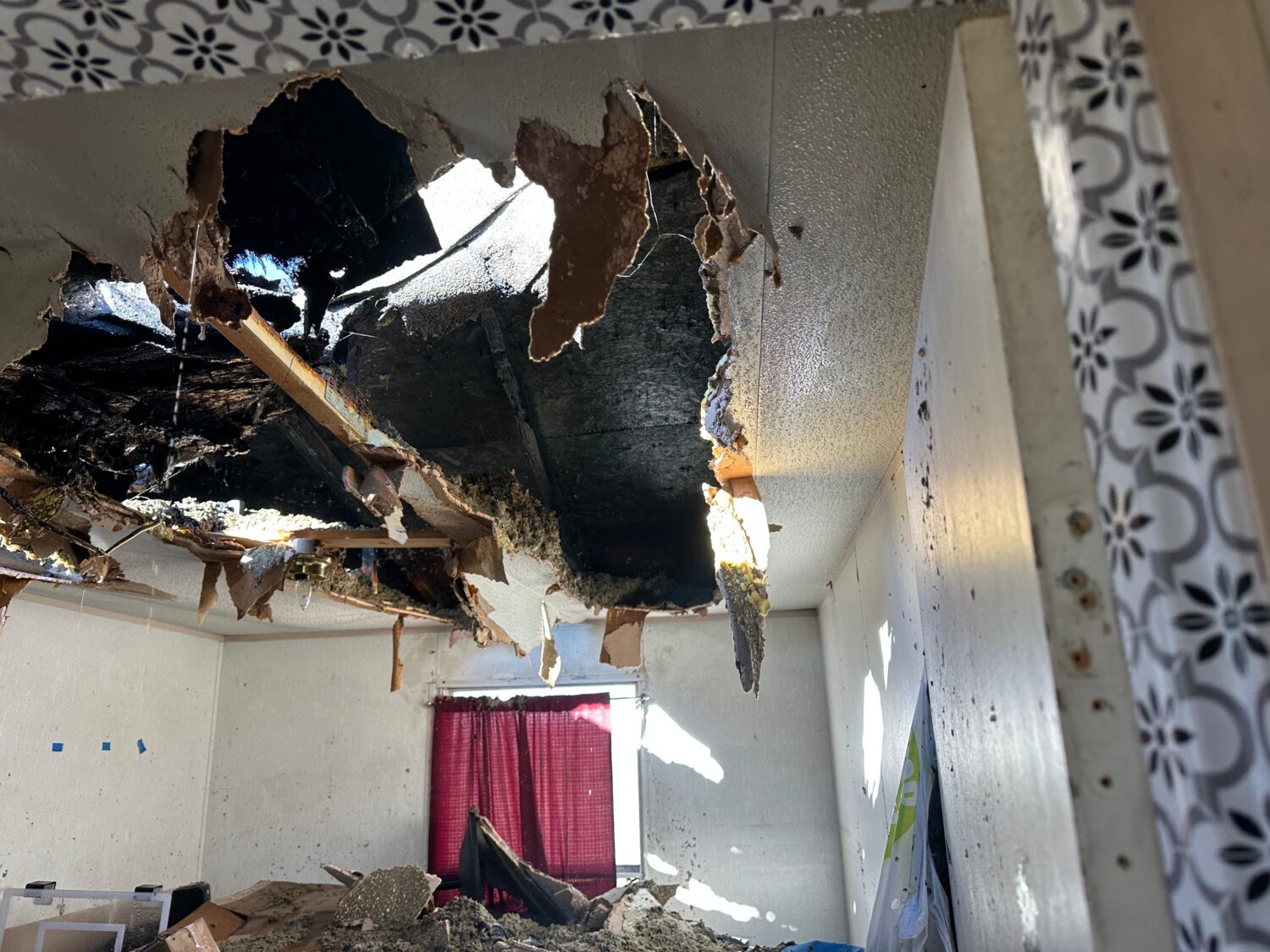
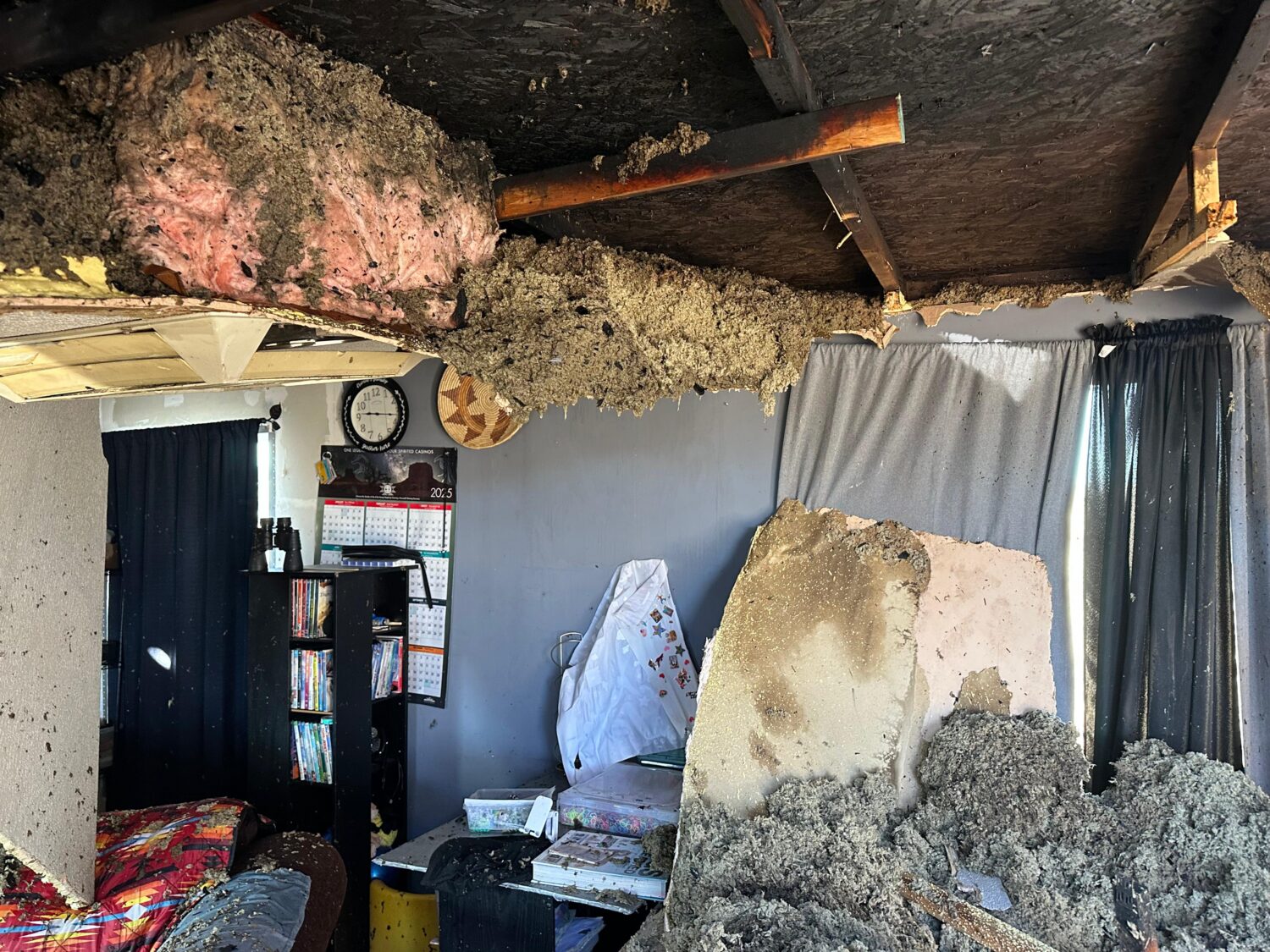
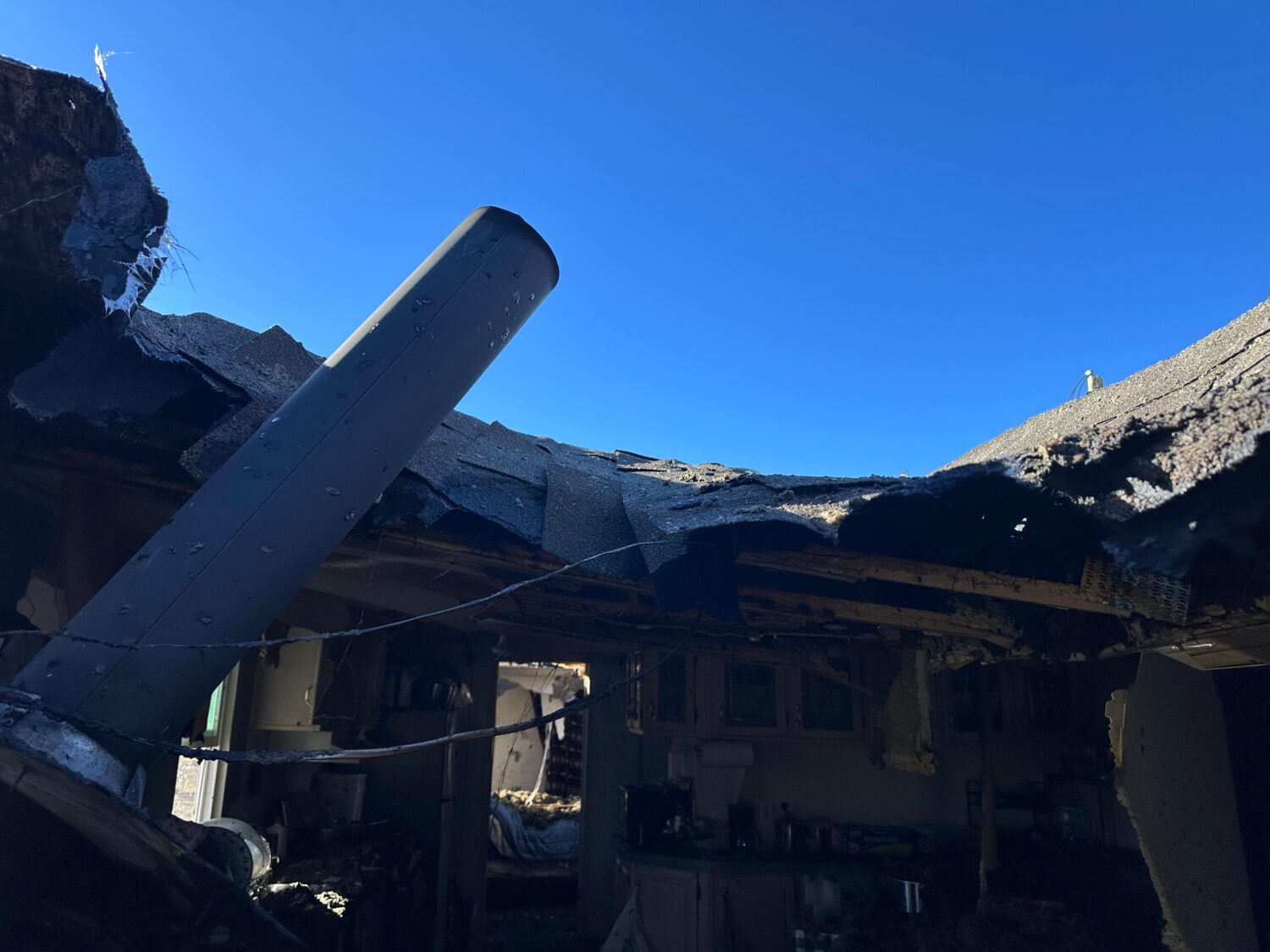
SBIMS: So, what do you feel is important for people to understand about the fire?
AA: I think that if you have a wood-burning stove, you need to have the right chimney for the trailer, which is for safety. I think it won’t burn your house down. (…) The one I had — I couldn’t afford the chimney kit. So, the guy that fixed it said, “Oh, this one will work too, and it’s cheaper.” But I guess it wasn’t cheap, because before, when I had the chimney going through the window, we never had problems. For some reason, I wanted it through the roof, and I couldn’t afford the kit. Like I said, he’s the one I thought knew. Since he builds houses, he only lived in it for three months when it caught fire from that same chimney.
SBIMS: What helped you get through this following the fire incident?
AA: At first, I cried and cried for the longest time. Then some of my friends gave me money for gas and whatnot. I was still working, though. And my job couldn’t help me with anything. I just asked them for some pallets so my husband could build a small shed house for whatever stuff we could put in. Friends talking to me and praying a lot helped me. I had a traditional ceremony, then I prayed a lot. I cried. Even when I’m driving, I cry. I pray that I’m okay again. But we just stick together. I have to keep working. We need gas, money, or food, so I have to keep working to stay busy.
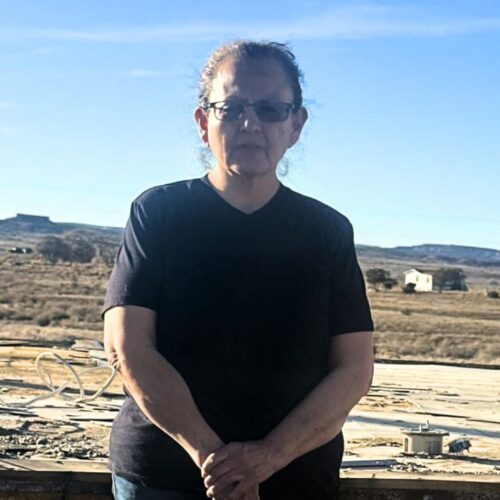
“I realize we are homeless, but I still think God will help us with a home someday to start a brand-new life for us.”
SBIMS: So, what have you learned about yourself during this time? It sounds like you’re a strong and determined woman.
AA: I learned that we were homeless. Before, when I [saw] homeless people, especially older people, I always [bought] them coffee and [prayed] for them to find a good home and a warm place. I realized that, materially, we didn’t really have many things, [even though] I’ve been working by myself for so long. It’s always been me working financially to have stuff, but most went to gas. Now I realize we are homeless, but I still think God will help us with a home someday to start a brand-new life for us. I’m humble, and I don’t put anybody down. I just leave it in God’s hands and think He can fix it for us.
SBIMS: We understand that you’re a grandmother and a caregiver…
AA: Yes, yes, yes. Well, all of those. I’m a grandmother. I’m a caregiver for my daughter.
SBIMS: You’re a grandmother and caregiver to your daughter, who is 23 years old. So, tell me, as a mother and caregiver, what are you most proud of in your life?
AA: I’m the happiest because I became a grandma. I only have one grandson, and I’m also happy that my daughter lived this long when the doctors said she was going to die at the age of four. But she’s [beaten the odds] this long, and when we’re together, we’re happy. We’re each other’s strength.
SBIMS: That’s amazing. So, what does home mean to you beyond a physical house?
AA: [She gets emotional] I’m sorry. It just makes me emotional. When I think about my home, or when I try to come to terms with accepting what happened, a home is my heart. It’s my mind, a place where I eat and where I come in and sleep. So, I don’t have any. A part of me is shattered, especially my heart. I prayed about my fire, and before my house burned down, our trailer was really old, so I had a fire before this. In between, there’s probably 10 years — the same thing from the roof caught fire. I had lost my home before. This is the second one. And so, St. Bonaventure [Indian Mission & School], the one that I bought a trailer from (…), it was okay to live in. But when my house burned down, it took a lot out of me. It’s really emotional when I talk about my home. Now we really have no place to go, but I always pray to God. Before the house burned down, I used to stand outside at five in the morning or six, giving offerings to the Holy People, the Morning Gods. I tell them one day I’m going to have a beautiful home. I’m 62. I want to have a nice home before I retire and enjoy my life. I never really had a home either built or something new. I don’t know if it was a message from God that now I can start from the ground up, even a small shack house. I think about that. When I think of home, it’s happiness (…), but now I have nothing.
SBIMS: That’s deep. Is there anything else that you can remember?
AA: (…) I really had nothing ever since the day I could remember. It’s always been my daughter suffering, things going on in life, living in hospitals and still doing hospital visits because of her disability. So, there’s no resource.
SBIMS: Looking forward, what does rebuilding your home mean to you?
AA: I would love to have a new home built. I have some papers [from the] Navajo Nation. They have a place called the HU Program [sic] or something [Navajo Nation Hardship Assistance Program], but it’s a lot of paperwork, and I still have it. They want so [much] documentation, and I haven’t turned it in. But the lady said there’s a waiting list. I’m not sure if they’re going to put you up front because people have been waiting (…). I have all my daughter’s doctors’ letters from hospitals all over asking for a house for us. But really, nothing. There’s a waiting list. So, I would love to have a new home.
SBIMS: So, having a new home is what you’re hoping for in the next chapter of your life…
AA: Yes. I thought of buying just a used trailer, but financially, I don’t know if I can do it. I’m 62, and with my daughter’s disability, sometimes I just want to retire. But they tell me I’m not going to get my full benefit and paying for a trailer — I might get behind. I don’t know, with our bad credit, who can buy us a trailer in their name? Nobody would do that for us. I looked at used trailers on Facebook. There are some, but then there are towing costs. Again, they charge a lot, even for a short distance. I had my trailer moved once or twice, and at the time I paid $1,500 — probably more now.
“Native women are strong. Most of them are single — single moms with kids — and we have to struggle. We don't depend on a man; we must depend on ourselves — sick or not — go to work even if the ride breaks down. We must keep working to make money. And our kids are what keep us going.”
SBIMS: Finally, Mrs. Arlene, what would you like people to understand about Native women in your community?
AA: That Native women are strong. Most of them are single — single moms with kids — and we have to struggle. We don’t depend on a man; we must depend on ourselves — sick or not — go to work even if the ride breaks down. We must keep working to make money. And our kids are what keep us going. Also, speaking for myself, I see a lot of women struggle alone and sometimes turn to drinking, but I don’t. I just have prayers. I’m not the only one struggling. Some have homes, some don’t. Some don’t have jobs, some do. All kinds of problems that we face every day as Native women. And I know we’re strong because I see them, and we try to talk to each other (…). I think we’re just taught to work and get what we want on our own.
SBIMS: In closing, if you could say one sentence directly to the people who will hear or read your story, what would you tell them?
AA: Keep me in your prayers for a new home.
Disclaimer: This interview has been edited for clarity, flow, and length. The substance, meaning, and voice of the interviewee have been faithfully maintained.